By Iqra Sharjeel
When you pick up your prescription from the pharmacy, you might notice small colorful stickers attached to your medication bottle or box. These are called auxiliary labels, and they are far more important than they appear. They provide critical information that can protect your health, prevent drug interactions, and ensure your medicine works effectively.
But here’s the catch: not every medication comes with all the auxiliary labels it might need — unless you ask.
What Are Auxiliary Labels?
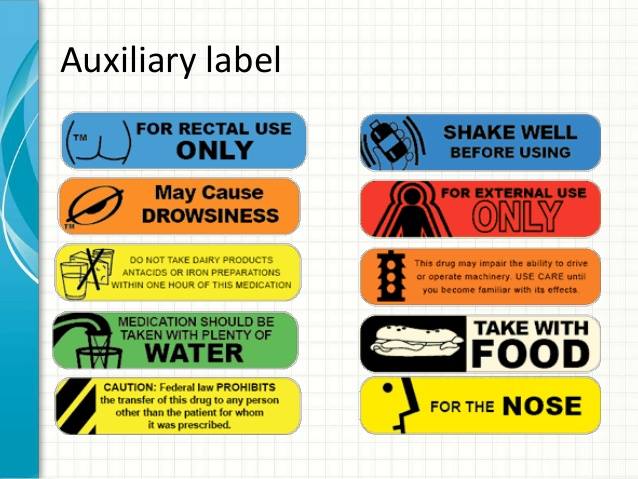
Auxiliary labels are additional instruction stickers placed on prescription containers. They are designed to give patients supplementary warnings or usage instructions that are not typically found on the main prescription label. These labels may include phrases like:
- “Take with food”
- “Avoid sunlight”
- “Do not take with alcohol”
- “Shake well before use”
- “Refrigerate”
- “May cause drowsiness”
Although small, these labels carry a big message.
🧠 Why Are They So Important?
Many patients assume that all necessary information is already printed on the main label or leaflet. While those documents are important, auxiliary labels serve as quick reminders that can significantly impact:
1. Safety
Some medications can cause severe side effects or dangerous interactions if not taken as instructed. For example, combining certain antibiotics with dairy or alcohol can reduce effectiveness or increase toxicity.
2. Effectiveness
If you’re prescribed a medication that requires food for absorption (like some antifungals or iron supplements), missing that instruction can reduce its therapeutic effect.
3. Storage
Some medications lose their potency if not stored correctly. A “Refrigerate” label, for instance, ensures you maintain the drug’s stability and shelf life.
4. Avoiding Harmful Reactions
Photosensitive medications may cause skin burns or rashes in sunlight. An auxiliary label warning you to “Avoid sunlight” can prevent unnecessary discomfort or medical complications.
❗ Why You Should Always Ask
In busy pharmacies or during high-volume prescription hours, auxiliary labels may occasionally be overlooked or not automatically attached. Also, not every pharmacist will explain them unless prompted.
That’s why patients should take charge of their health by asking:
“Are there any auxiliary labels or special instructions I should know about this medicine?”
This simple question can prompt a valuable conversation and ensure you’re fully informed.
Real-Life Examples
- A patient taking metronidazole without knowing to avoid alcohol may suffer severe nausea or vomiting.
- A child’s liquid antibiotic that isn’t refrigerated may lose its potency and fail to treat the infection.
- A driver taking sedative medication without a “May cause drowsiness” warning could risk road accidents.
These aren’t rare scenarios — they happen daily. Auxiliary labels help prevent them.
Pharmacists Are Here to Help
Remember, your pharmacist is a trained healthcare professional who understands how medications work and how to take them safely. If you’re ever unsure about:
- When to take your medication
- How to store it
- What foods or drinks to avoid
- What side effects to watch for
Just ask. Pharmacists are happy to explain and provide all the necessary labels to guide you.
Final Takeaway
Never leave the pharmacy without understanding how to take your medicine properly. Asking for auxiliary labels takes only a moment, but it can make a lifesaving difference.
Make it a habit:
🗣 “Are there any special labels or instructions I need to follow with this medication?”
Your health is worth the extra question.
Subscribe for more information: www.sapere.video.blog


You must be logged in to post a comment.