
What is coral bleaching?
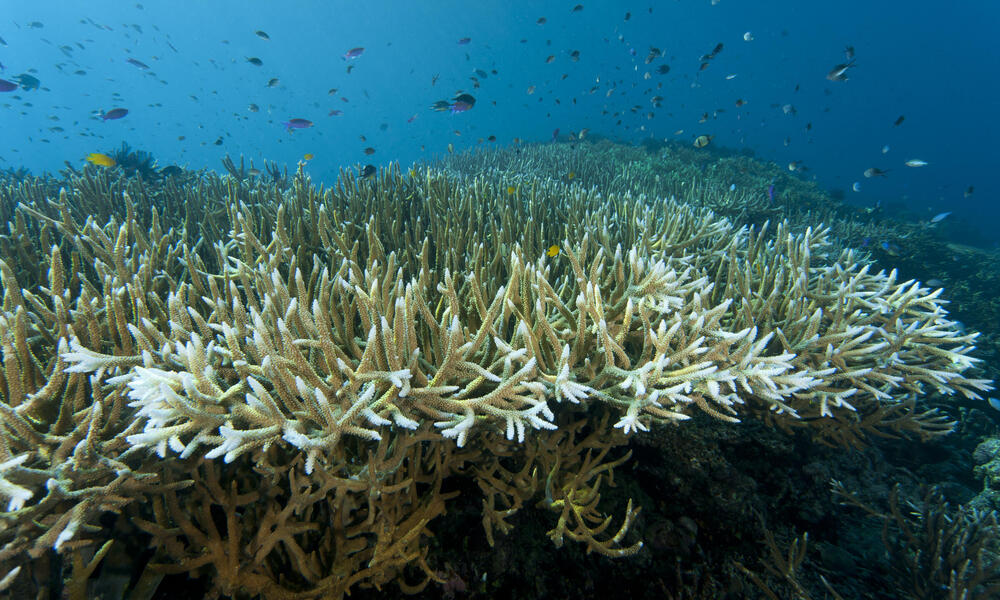
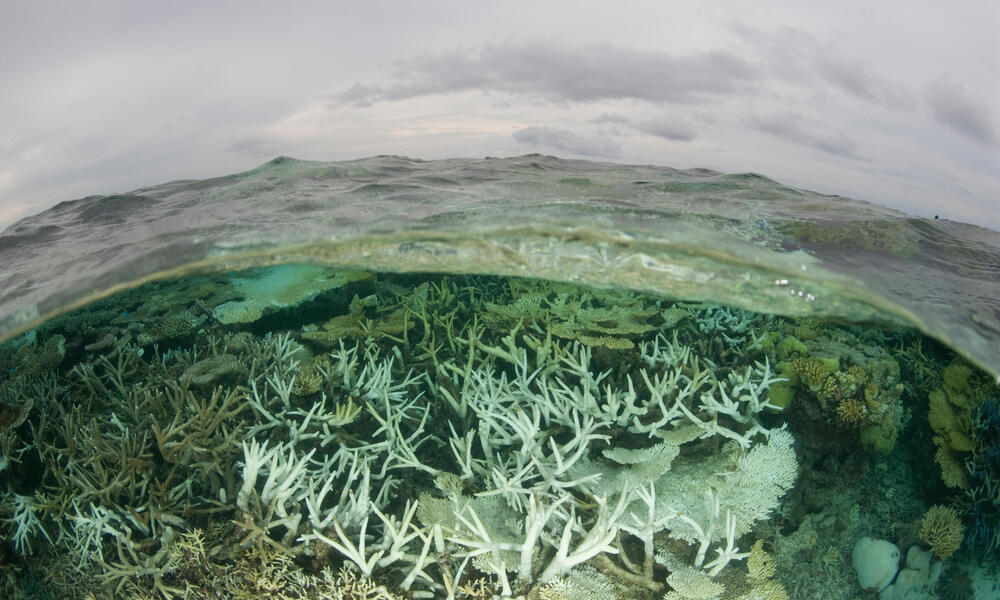
Coral bleaching happens when corals lose their vibrant colors and turn white. But there’s a lot more to it than that. Coral are bright and colorful because of microscopic algae called zooxanthellae. The zooxanthellae live within the coral in a mutually beneficial relationship, each helping the other survive. But when the ocean environment changes—if it gets too hot, for instance—the coral stresses out and expels the algae. As the algae leaves, the coral fades until it looks like it’s been bleached. If the temperature stays high, the coral won’t let the algae back, and the coral will die.
The Impacts
 © Jürgen Freund / WWF
How does coral bleaching impact wildlife?
Coral reefs support some of the most biodiverse ecosystems on the planet. Thousands of marine animals depend on coral reefs for survival, including some species of sea turtles, fish, crabs, shrimp, jellyfish, sea birds, starfish, and more. Coral reefs provide shelter, spawning grounds, and protection from predators. They also support organisms at the base of ocean food chains. As reef ecosystems collapse, already at-risk species may face extinction.
How does coral bleaching impact humans?
Coral bleaching impacts peoples’ livelihoods, food security, and safety. Coral reefs are natural barriers that absorb the force of waves and storm surges, keeping coastal communities safe. Without them, we must rely on manmade seawalls that are expensive, less effective, and environmentally damaging to construct. Bleached coral also compounds the overfishing crisis by removing links in the food web and depriving some fish and crustacean species of a place to spawn and develop. Anyone relying on these animals as a primary source of income or protein will be in trouble. Finally, reef tourism brings in billions of dollars each year and supports thousands of jobs. Bleached coral reefs, devoid of magnificent marine species, jeopardize it all
How You Can HelpWe all have a role in protecting coral reefs
 © Jürgen Freund / WWF
We are not doomed to lose all corals to bleaching, but we need to act now if we want to protect coral for future generations. Small, daily actions can help reduce coral reef loss, like reducing stormwater and fertilizer runoff or avoiding herbicides and pesticides. But if we really want to solve the coral bleaching problem, we must address climate change. That means global, comprehensive, and immediate action to reduce emissions – something that WWF is determined to accomplish. We’re working to stop deforestation; help businesses, consumers, and cities transition to renewable energy; and guide governments toward climate-smart policies. Together we can act now to save the world’s coral reefs from bleaching before it’s too late.


You must be logged in to post a comment.