
Advertisements
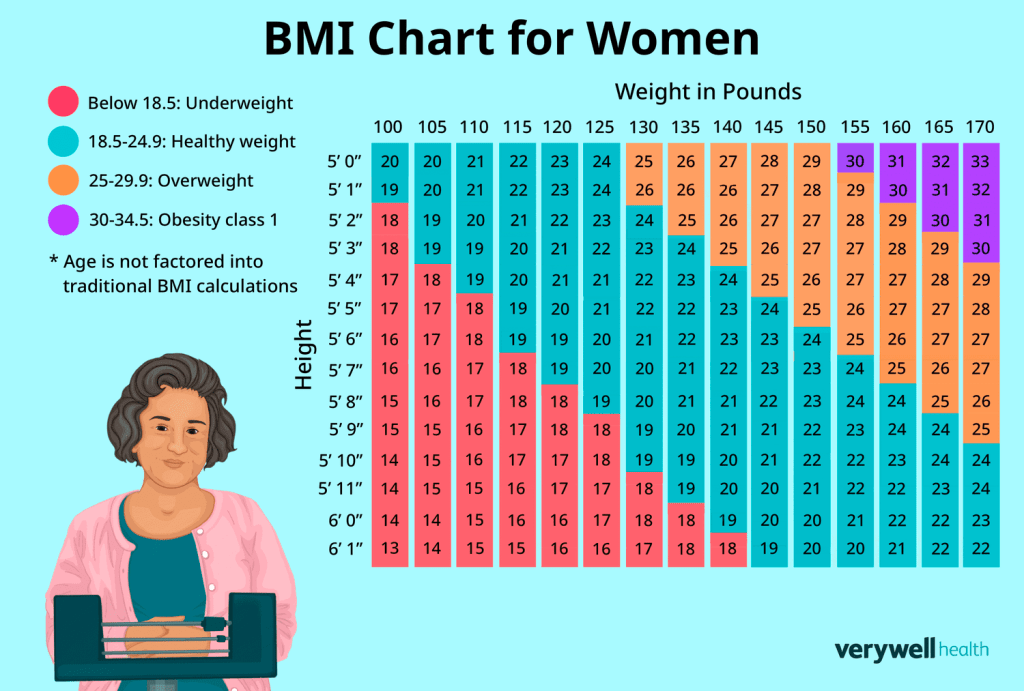
BMI stands for Body Mass Index. It is a simple, widely used tool to assess whether a person has a healthy body weight for their height.
Advertisements
🔢 How is BMI Calculated?
BMI=Weight (kg)Height (m)2BMI=Height (m)2Weight (kg)
Or, if you’re using pounds and inches:BMI=Weight (lb)×703Height (in)2BMI=Height (in)2Weight (lb)×703
📊 BMI Categories (for Adults)
| BMI Range | Category |
|---|---|
| Below 18.5 | Underweight |
| 18.5–24.9 | Normal weight |
| 25–29.9 | Overweight |
| 30 and above | Obese |
Advertisements
❗ Why Is BMI Important?
- Quick screening tool for potential health issues.
- Helps doctors assess the risk of diseases such as:
- Heart disease
- Type 2 diabetes
- High blood pressure
- Sleep apnea
| Height | Underweight<br>(<18.5) | Normal<br>(18.5–24.9) | Overweight<br>(25–29.9) | Obese<br>(≥30) |
|---|---|---|---|---|
| 4’10” | < 91 lbs | 91–118 lbs | 119–142 lbs | 143+ lbs |
| 5’0″ | < 97 lbs | 97–127 lbs | 128–153 lbs | 154+ lbs |
| 5’2″ | < 104 lbs | 104–136 lbs | 137–164 lbs | 165+ lbs |
| 5’4″ | < 110 lbs | 110–145 lbs | 146–175 lbs | 176+ lbs |
| 5’6″ | < 117 lbs | 117–154 lbs | 155–186 lbs | 187+ lbs |
| 5’8″ | < 123 lbs | 123–163 lbs | 164–196 lbs | 197+ lbs |
| 5’10” | < 129 lbs | 129–173 lbs | 174–208 lbs | 209+ lbs |
| 6’0″ | < 136 lbs | 136–183 lbs | 184–220 lbs | 221+ lbs |
| 6’2″ | < 143 lbs | 143–193 lbs | 194–232 lbs | 233+ lbs |
Advertisements
⚠️ Limitations of BMI
- Does not measure body fat directly
- May misclassify muscular individuals (e.g., athletes)
- Doesn’t account for age, sex, or muscle-to-fat ratio
- Not suitable for children without age-adjusted percentiles
Advertisements
🩺 Bottom Line
BMI is a useful general guideline, but it should be interpreted alongside other measurements like waist circumference, body fat percentage, and overall health assessments.


You must be logged in to post a comment.