By Iqra Sharjeel
DONATE FOR ME BY CLICKING ME: 🐘 (WWF site for donation)
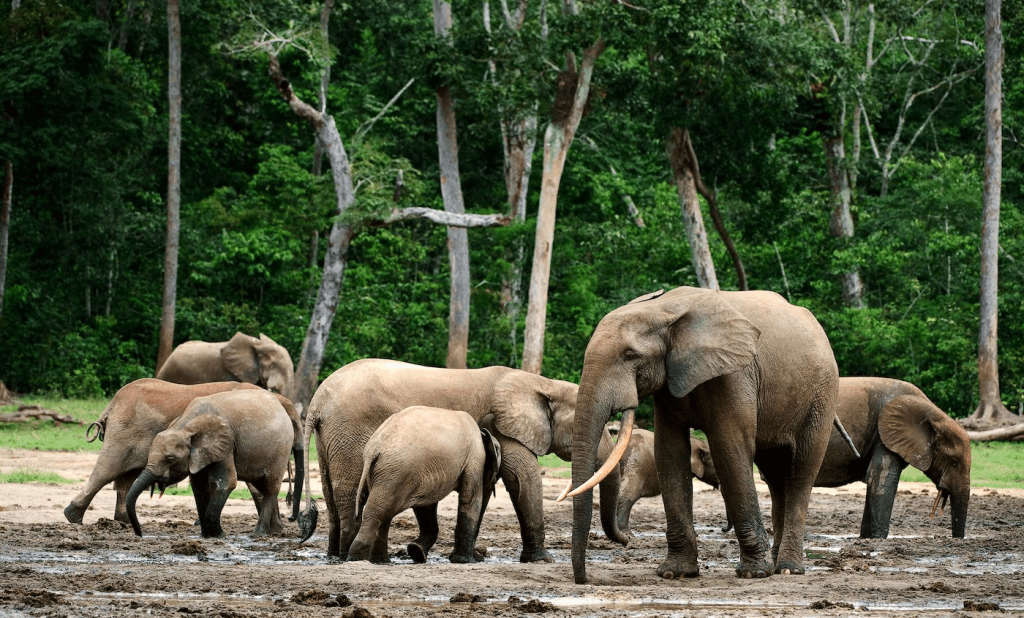
Hidden deep within the lush, dense rainforests of Central and West Africa roams a creature so elusive, even seasoned wildlife researchers rarely catch a glimpse. Smaller and more secretive than its savanna-dwelling cousin, the African forest elephant (Loxodonta cyclotis) is a keystone species—and a symbol of both nature’s majesty and its fragility.
Once widespread across the Congo Basin and neighboring ecosystems, this species is now listed as critically endangeredon the IUCN Red List. Decimated by poaching, habitat loss, and decades of neglect, forest elephants are disappearing silently. Their decline threatens not only biodiversity but the health of entire forest ecosystems.
So why does this majestic creature matter so much, and what can we do to save it?
🌳 Who Is the African Forest Elephant?
The African forest elephant is one of two species of African elephants, the other being the African savanna elephant (Loxodonta africana). Though they were once considered a subspecies, genetic studies have confirmed they are distinct species, having diverged from each other over 2 million years ago.
🔍 Key Characteristics:
- Size: Smaller than the savanna elephant, standing about 2.4 meters at the shoulder.
- Ears: Rounder and smaller.
- Tusks: Straighter and downward-pointing, made of pinkish ivory that is highly prized.
- Habitat: Dense rainforests of the Congo Basin and other parts of West and Central Africa.
Their shy nature and preference for remote forests have helped them avoid human attention—until now.
🌿 The Role of Forest Elephants in Ecosystems
Often called the “gardeners of the forest”, forest elephants play a crucial ecological role in maintaining the health and diversity of tropical rainforests.
🍃 1. Seed Dispersers
Forest elephants consume large quantities of fruit and vegetation. Many seeds pass through their digestive systems and are deposited miles away, often in nutrient-rich dung. This dispersal helps forests regenerate and maintain biodiversity.
🌳 2. Forest Shapers
With their strength, elephants clear pathways through dense vegetation, allowing light to reach the forest floor. This creates opportunities for a variety of plant and animal species to thrive.
🐜 3. Biodiversity Boosters
Their movements and foraging behavior influence where plants grow, which in turn affects the distribution of insects, birds, and other animals.
In essence, protecting forest elephants helps protect the entire rainforest ecosystem—a system that supports millions of species and stores billions of tons of carbon.
📉 Population Decline: A Silent Crisis
The African forest elephant population has declined by more than 86% over the past 30 years, according to the IUCN. Their slow reproductive rate—females give birth every 5–6 years—makes it difficult for populations to recover.
🚫 Major Threats:
1. Poaching for Ivory
Forest elephants are particularly vulnerable to poaching due to the high demand for their ivory. Their tusks, denser and pinkish in hue, are favored on illegal markets. Despite international bans on ivory trade, black markets in Asia and parts of Africa continue to drive hunting.
2. Habitat Loss
Deforestation for logging, mining, and agriculture is fragmenting the elephants’ habitat. Roads, railways, and human settlements restrict their movement and increase human-elephant conflicts.
3. Human-Wildlife Conflict
As forests shrink, elephants are forced into human-dominated areas, where they may raid crops. In retaliation, they are often killed or injured by farmers defending their livelihoods.
4. Lack of Legal Protection
In some countries, forest elephants are not legally recognized as distinct from savanna elephants, complicating conservation efforts. Corruption and weak enforcement further hinder protections.
🧠 Why Should We Care?
It’s easy to overlook animals we rarely see—but doing so would be a tragic mistake.
🌍 1. Climate Regulation
By dispersing seeds of large, slow-growing trees, forest elephants contribute to carbon sequestration. Losing them would disrupt forest dynamics and reduce the forest’s capacity to store carbon—worsening climate change.
🧬 2. Biodiversity Preservation
Forest elephants support the survival of thousands of other species through their ecological roles. Their extinction would trigger a cascade of losses across the food web.
💧 3. Water Security
Healthy forests help regulate the water cycle. By maintaining forest structure, elephants indirectly support water availability, soil protection, and local rainfall patterns.
❤️ 4. Cultural and Ethical Values
In many African cultures, elephants are symbols of strength, wisdom, and harmony with nature. Protecting them honors both biological and cultural heritage.
🌐 Conservation Efforts: What’s Being Done?
Thankfully, conservationists, governments, and communities are stepping up.
🛡️ 1. Legal Protections and Enforcement
Several countries have increased penalties for poaching and improved anti-trafficking efforts. However, more must be done to close ivory markets and combat corruption.
📡 2. Technology and Monitoring
Satellite tracking, drones, and AI-powered camera traps are helping researchers monitor elephant populations and movements in real time, allowing for more strategic interventions.
👣 3. Community-Based Conservation
Initiatives that involve local communities—such as ecotourism, wildlife guards, and sustainable farming—create economic incentives for protecting elephants rather than exploiting them.
🌱 4. Protected Areas and Corridors
Establishing and connecting protected areas is vital. Projects like the TRIDOM (Tri-National Dja-Odzala-Minkébé) in Central Africa aim to conserve transboundary forest elephant populations.
🧩 Challenges Ahead
Despite progress, significant hurdles remain.
- Insufficient funding for forest elephant conservation.
- Political instability in key regions makes consistent policy implementation difficult.
- Climate change may alter forest ecosystems in unpredictable ways.
- Global demand for ivory and tropical timber persists.
Yet hope remains. Elephants are resilient. Given protection and time, they can bounce back.
📚 A Systems Thinking Approach
From the lens of systems thinking—used in education programs like IB Environmental Systems and Societies (ESS)—forest elephants are a textbook example of how interconnected natural systems work.
Their disappearance would create positive feedback loops:
- Reduced seed dispersal leads to forest degradation.
- Degraded forests store less carbon, accelerating climate change.
- Climate change stresses ecosystems further, pushing more species toward extinction.
By addressing forest elephant conservation, we simultaneously support climate stability, biodiversity, and human well-being.
💡 What Can You Do?
You don’t need to be a conservation biologist to help. Here’s how anyone can make a difference:
🛒 1. Ethical Consumption
Avoid products linked to deforestation (like unsustainable palm oil, tropical hardwoods, or conflict minerals). Choose certified sustainable products.
🐘 2. Support Conservation Organizations
Donate to or volunteer with groups like the Wildlife Conservation Society, Elephant Crisis Fund, or African Parksworking on the ground.
📣 3. Raise Awareness
Use your voice—share information on social media, host events, or write articles to educate others about the plight of the African forest elephant.
🗳️ 4. Advocate for Policy
Support laws that protect endangered species, ban ivory trade, and increase funding for conservation programs.
✨ Conclusion: A Chance to Turn the Tide
The African forest elephant is more than an animal. It is a pillar of the rainforest, a guardian of ecological balance, and a quiet steward of the Earth’s lungs. Its extinction would be an immeasurable loss—not just for Africa, but for the world.
But extinction is not inevitable.
With awareness, commitment, and action, we can ensure that future generations hear not just the echo of elephants in legends—but the living trumpet of giants wandering the forests, shaping nature with every step.
Let’s not let the forest fall silent. Let’s save the elephant—and in doing so, save ourselves.
DONATE FOR ME BY CLICKING ME: 🐘 (WWF site for donation)


You must be logged in to post a comment.