By Iqra Sharjeel
Introduction
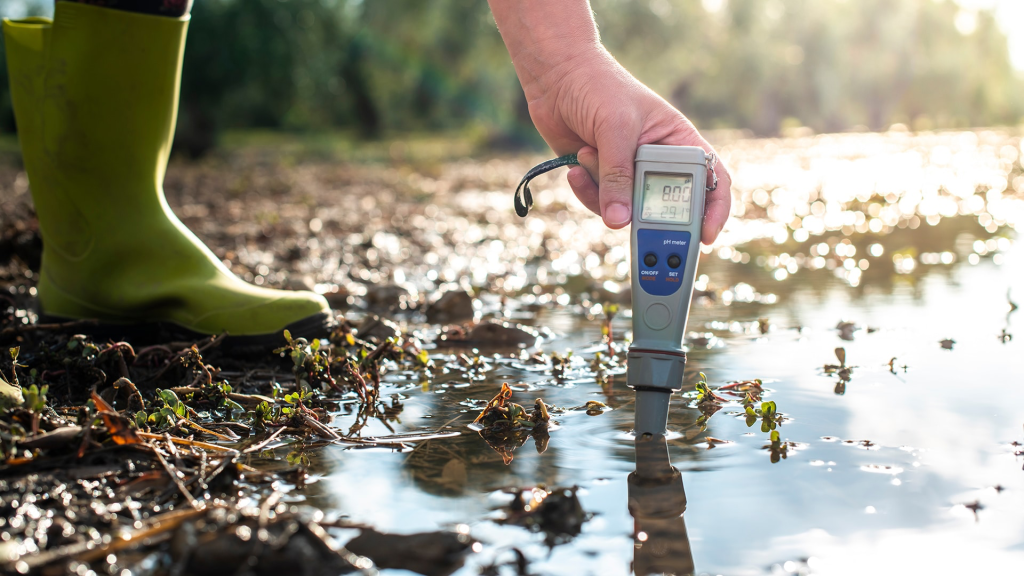
Water quality is a cornerstone of ecological health and human wellbeing. In coastal and estuarine regions of India, the interplay between physical and chemical factors like temperature, conductivity, and dissolved oxygen can reveal much about the state of aquatic ecosystems. This blog post explores a dataset from the Indian Government’s 2020 Water Quality Monitoring, offering insights through two key scatter plots:
- Temperature vs. Conductivity
- Temperature vs. Dissolved Oxygen
These visualizations help unpack how environmental conditions affect water chemistry across marine, beach, sea, and creek water bodies.
The Data: Averaged Water Quality Indicators
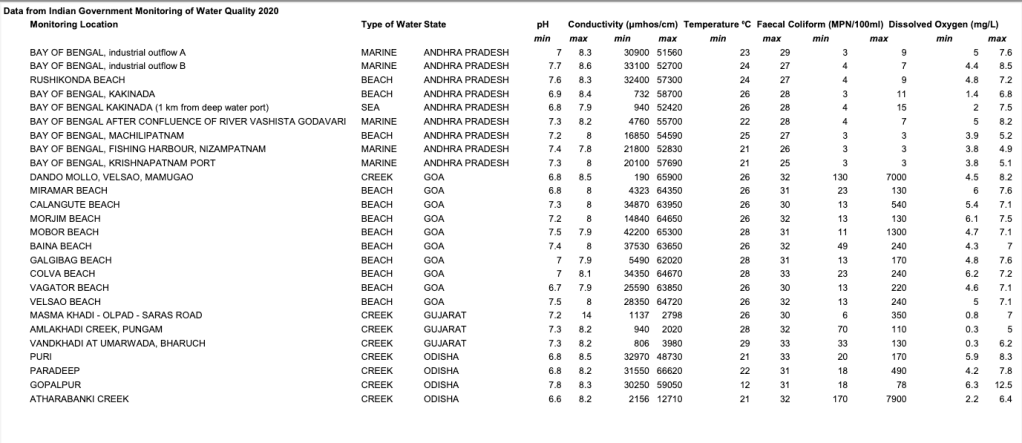
The dataset includes 26 monitoring locations from Andhra Pradesh, Goa, Gujarat, and Odisha, measuring parameters such as:
- Temperature (°C)
- Conductivity (μmhos/cm) – a measure of the water’s ability to conduct electricity, often linked to salinity and pollution.
- Dissolved Oxygen (mg/L) – crucial for aquatic life.
Each value used in our analysis represents an average from the reported minimum and maximum measurements at each site.
Scatter Plot Analysis
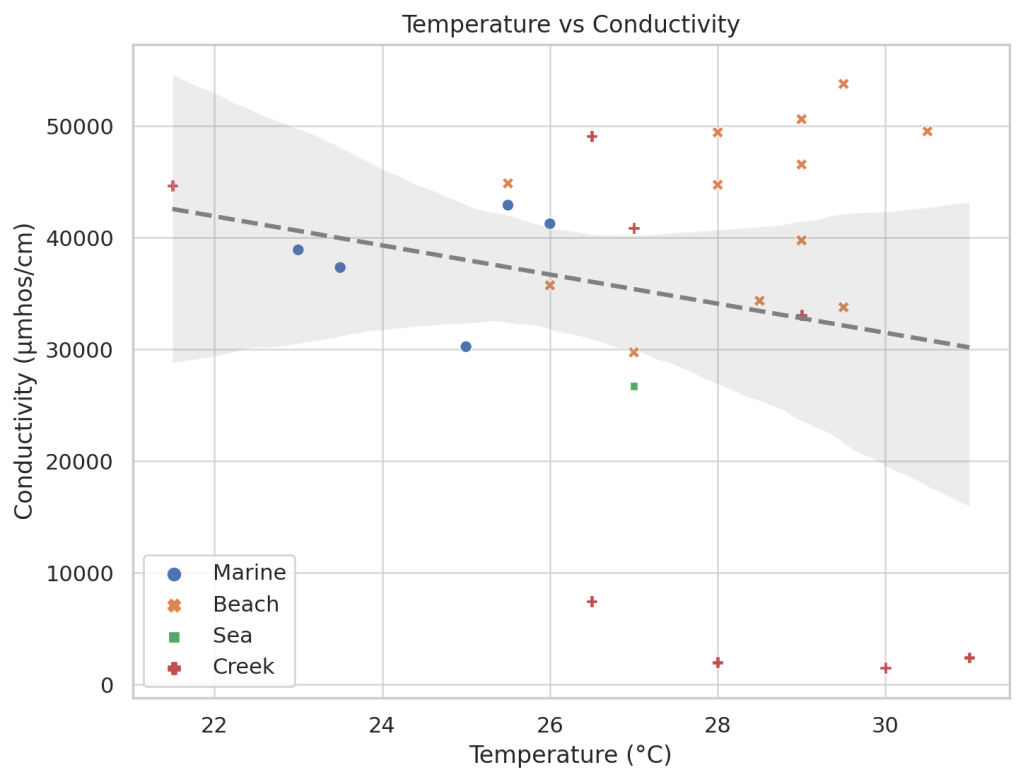
1. Temperature vs. Conductivity
Trend:
There appears to be a slight positive correlation between temperature and conductivity. As the temperature rises, conductivity generally increases, although this trend is not strictly linear.
Why it matters:
- Warmer temperatures can enhance ion mobility.
- Pollution and saline intrusions (especially in marine and creek areas) may further elevate conductivity.
- This suggests that temperature and human activity may jointly influence water chemistry.
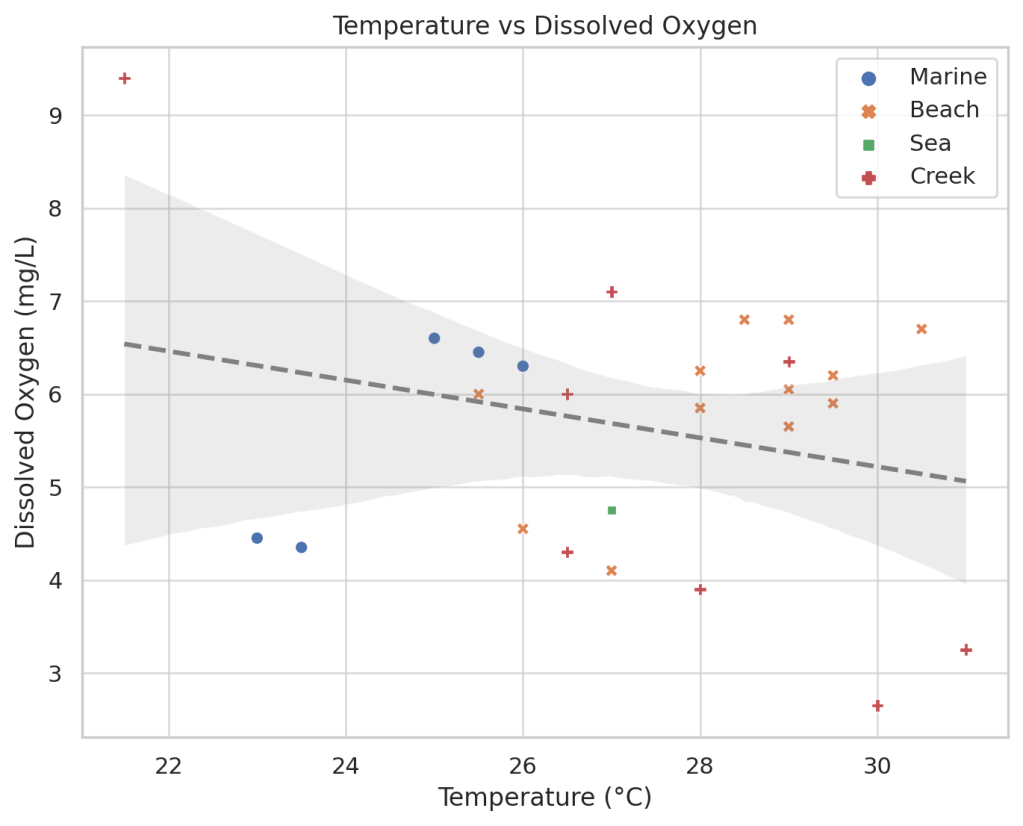
2. Temperature vs. Dissolved Oxygen
Trend:
A clear negative correlation emerges: as temperature increases, dissolved oxygen decreases.
Scientific rationale:
- Warmer water holds less oxygen.
- This impacts aquatic life, particularly fish and invertebrates that rely on higher oxygen concentrations.
- Low dissolved oxygen levels (below 5 mg/L) may signal eutrophication, organic pollution, or thermal stress.
Environmental Implications
These trends reflect broader ecological truths:
- Rising temperatures (linked to climate change) are likely to exacerbate oxygen loss in surface waters.
- High conductivity levels may point to pollution sources, especially around industrial outflows, ports, and urban beaches.
This investigation aligns with systems thinking in environmental science—understanding that thermal, chemical, and biological variables are interconnected and influenced by both natural and human-driven forces.
Summary
| Relationship | Correlation Type | Implication |
|---|---|---|
| Temperature vs. Conductivity | Slight Positive | Possibly higher ions in warmer/polluted areas |
| Temperature vs. Dissolved Oxygen | Negative | Warmer water holds less oxygen |
Final Thoughts
Water quality indicators like temperature, conductivity, and dissolved oxygen are not just numbers—they tell a storyabout the health of our aquatic ecosystems. In India’s coastal zones, where biodiversity and livelihoods intersect, understanding these relationships is critical.
Would you like to explore trendlines by region or water body type? Leave a comment below, or contact me for a deeper dive into the data.
🔗 Source: Indian Government Water Monitoring, 2020
© 2025 sapere.video.blog – All rights reserved.


You must be logged in to post a comment.