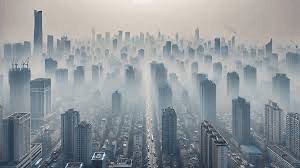
Air pollution, once dismissed as an unavoidable by-product of progress, has evolved into one of the most pressing global health emergencies of our time. Each year, toxic air claims the lives of approximately seven million people worldwide, with millions more suffering from chronic diseases, developmental impairments, and reduced quality of life. From the smog-choked cities of South Asia to the industrial belts of Europe and North America, no region remains untouched by this invisible killer. Air pollution has transcended borders, socio-economic divisions, and political agendas to become a truly global crisis — one that is quietly but steadily shortening human lifespans and crippling healthcare systems.
Toxic air consists of a complex mixture of gases, chemicals, and particles that originate from a variety of human activities. Among the most dangerous pollutants are particulate matter (PM2.5 and PM10), nitrogen dioxide (NO₂), sulfur dioxide (SO₂), ground-level ozone (O₃), and carbon monoxide (CO). These pollutants come from vehicle emissions, coal-fired power plants, industrial activities, construction dust, wildfires, and the burning of biomass and household fuels. PM2.5, which refers to particulate matter less than 2.5 micrometers in diameter, is especially hazardous due to its ability to penetrate deep into the lungs and enter the bloodstream. Once inside the body, these particles cause inflammation, damage tissues, and disrupt normal physiological functions. While short-term exposure leads to irritation and respiratory distress, long-term exposure significantly increases the risk of heart attacks, strokes, lung cancer, and even neurodegenerative diseases like Alzheimer’s.
The most immediate and visible impact of air pollution is on the respiratory system. Inhalation of polluted air irritates the airways, leading to increased cases of asthma, bronchitis, and chronic obstructive pulmonary disease (COPD). Children exposed to high levels of air pollution are more likely to suffer from respiratory infections and are at risk of stunted lung development. In adults, chronic exposure to PM2.5 and NO₂ can trigger the onset of lung cancer, even among non-smokers. But the damage doesn’t stop at the lungs. Airborne toxins enter the bloodstream and travel to various organs, increasing the risk of cardiovascular diseases. Studies have shown that air pollution contributes to high blood pressure, arrhythmias, atherosclerosis (hardening of the arteries), and ischemic heart disease. In fact, cardiovascular complications account for the majority of air pollution-related deaths globally.
Emerging research also reveals a worrying connection between toxic air and cognitive decline. Long-term exposure to fine particulate matter has been linked to increased risks of dementia, including Alzheimer’s disease. Children living in polluted urban environments often exhibit lower academic performance and developmental delays, suggesting that air pollution may also impair brain development. Moreover, new studies suggest that toxic air can affect the reproductive system, leading to lower fertility rates, pregnancy complications, and low birth weights. It can even disrupt the endocrine system, potentially triggering metabolic disorders and hormone imbalances.
Globally, the burden of air pollution is unevenly distributed, with low- and middle-income countries bearing the brunt of the impact. In cities like Delhi, India and Lahore, Pakistan, winter smog reaches such hazardous levels that schools are shut down, flights are canceled, and residents are advised to stay indoors. In some Indian cities, the air quality index (AQI) routinely exceeds 500, a level considered “severe” and directly harmful to health. The World Health Organization (WHO) estimates that around 2 million people in India alone die prematurely every year due to air pollution. In China, stringent government measures have led to a significant reduction in air pollution over the past decade, but the country still faces challenges due to industrial emissions and urbanization. African nations, particularly those with unregulated industrial activity and high reliance on biomass for cooking, are also experiencing increasing health burdens due to poor air quality, though data collection remains limited.
Even in wealthier nations with stronger environmental policies, toxic air remains a serious concern. In the United States, the American Lung Association’s “State of the Air” report consistently finds that over 40% of Americans live in areas with unhealthy air. California, despite being a pioneer in environmental legislation, regularly struggles with air quality due to wildfires and high traffic emissions. European countries, while more regulated, still face seasonal spikes in pollution due to heating and transport. Cities like Paris, Milan, and Warsaw have all implemented emergency measures — including car bans and free public transport — during episodes of extreme air pollution.
Indoor air pollution is another deadly dimension often overlooked in global health discourse. Around 2.8 million deaths annually are attributed to indoor air pollution, especially in regions where households use wood, coal, dung, or kerosene for cooking and heating. Women and young children are disproportionately affected, as they spend more time indoors and closer to the hearth. Poor ventilation, combined with the burning of solid fuels, produces toxic smoke that fills the home, leading to pneumonia, low birth weight, and even sudden infant death syndrome (SIDS). Despite being preventable, indoor air pollution remains a silent killer in many developing regions, underscoring the urgent need for clean cooking solutions and rural electrification.
The economic cost of air pollution is staggering. According to the World Bank, global welfare losses from air pollution exceed $8.1 trillion annually, equivalent to 6.1% of the world’s GDP. These costs include healthcare expenditures, lost labor productivity, and premature deaths. In countries with already strained healthcare systems, the added burden of pollution-related diseases leads to overcrowded hospitals, increased mortality, and deepened health inequalities. Air pollution also undermines economic development by reducing workforce efficiency, increasing absenteeism, and driving up insurance premiums. In this way, toxic air is not only a public health emergency but also a barrier to social and economic progress.
Despite the grim statistics, there is hope. Air pollution is preventable, and effective policy interventions can lead to rapid improvements in air quality and health outcomes. The success stories of cities like London, which phased out coal use and implemented congestion charges, or Beijing, which closed hundreds of factories and upgraded vehicle standards, demonstrate that change is possible. Investing in renewable energy, transitioning to electric vehicles, enforcing emissions regulations, and promoting urban green spaces are all critical steps toward cleaner air. On an individual level, actions such as using public transport, reducing energy consumption, supporting clean energy policies, and advocating for environmental justice can contribute to a collective solution.
Technological innovations also offer promising tools for monitoring and reducing air pollution. Low-cost air quality sensors, satellite data, and AI-based forecasting systems allow for real-time tracking of pollution hotspots. Mobile apps now provide individuals with localized AQI data, empowering them to make informed decisions about outdoor activities. Furthermore, international cooperation through agreements like the Paris Climate Accord and platforms such as the United Nations Environment Programme (UNEP) can facilitate cross-border strategies to combat transboundary air pollution and address global climate change simultaneously.
In conclusion, toxic air is one of the leading environmental causes of death and disease globally, affecting every aspect of human health and well-being. Its pervasive and often invisible nature makes it easy to ignore — but the evidence is undeniable and increasingly urgent. The toll of air pollution is not confined to distant industrial zones or far-off megacities; it is present in our neighborhoods, our homes, and even our bodies. Reducing air pollution is not just an environmental imperative — it is a moral, medical, and economic necessity. With coordinated global action, technological innovation, and community engagement, it is possible to clear the air and save millions of lives each year.


You must be logged in to post a comment.