By Iqra Sharjeel
Based on: Collision of herbal medicine and nanotechnology: a bibliometric analysis of herbal nanoparticles from 2004 to 2023

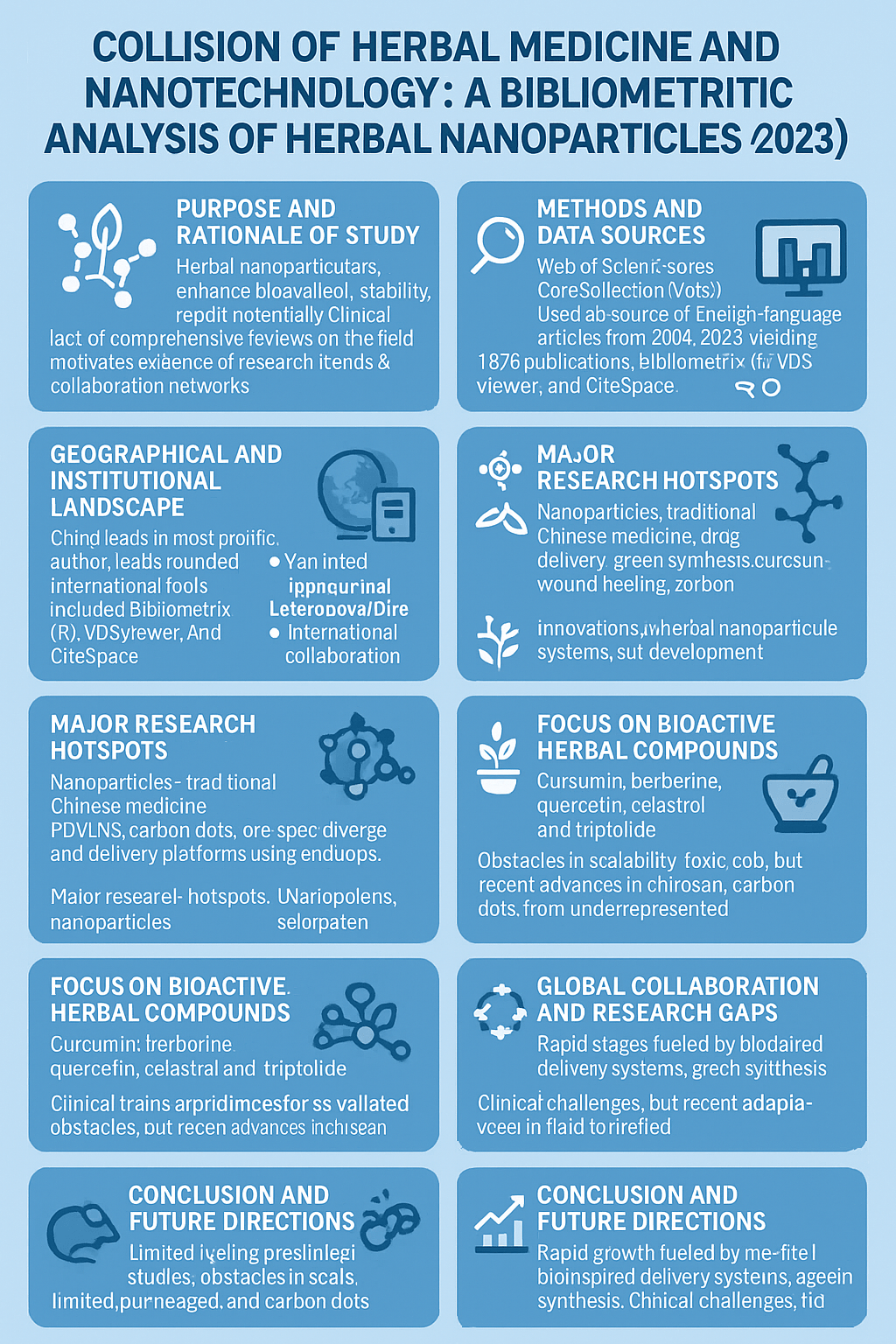
This pioneering bibliometric analysis bridges two dynamic fields: herbal medicine and nanotechnology. Herbal nanoparticles—created from medicinal plants or extracts and integrated into nanocarriers—offer improved bioavailability, stability, and reduced toxicity compared to traditional formulations. Despite the field’s rapid growth, a comprehensive overview of research trends, collaboration networks, and scientific output has been lacking. The study addresses this gap by systematically analyzing herbal nanoparticle literature from 2004 to 2023 using tools like Bibliometrix (R), VOSviewer, and CiteSpace. This quantitative approach provides a roadmap for understanding historical progress and anticipating future directions in herbal nanomedicine.
Methods and Data Sources
The research utilized the Web of Science Core Collection (WoSCC) as the data source, covering English-language articles from 2004 to the end of 2023. A total of 1,876 publications were identified using a comprehensive search strategy that included terms related to both herbal medicine (e.g., “medicinal plants,” “phytochemicals”) and nanotechnology (e.g., “nanoparticles,” “carbon dots”). Bibliometric tools such as R-Bibliometrix, CiteSpace, and VOSviewer were employed for detailed analysis of publication counts, citations, co-authorships, institutions, journals, and keywords. The analysis followed a rigorous workflow to ensure an accurate and nuanced visualization of the field’s evolution.
Geographical and Institutional Landscape
China emerged as the leading country in herbal nanoparticle research, both in publication output and citation impact, with over 3,000 articles and more than 20,000 citations. India and Iran followed, reflecting their rich traditions in herbal medicine (Ayurveda and Unani systems). The United States, while producing fewer publications, played a key role in international collaboration. Leading institutions included Beijing University of Chinese Medicine, Shanghai University of Traditional Chinese Medicine, and Saveetha University in India. Despite a concentration of research in Asia, growing international collaboration—particularly among China, India, and the U.S.—signifies the global relevance of this research field.
Key Authors and Publishing Outlets
Among the 8,234 contributing authors, Yan Zhao was the most prolific and highly cited, followed closely by Yue Zhang and Huihua Qu, all affiliated with Beijing University of Chinese Medicine. These researchers have focused heavily on carbon dots (CDs) and nanoparticle drug delivery systems. The International Journal of Nanomedicine emerged as the most productive and influential journal, followed by Molecules and Talanta. These journals consistently published high-impact research, emphasizing the interdisciplinary nature of herbal nanomedicine and its acceptance in both pharmaceutical and materials science communities.
Major Research Hotspots
Keyword clustering and co-occurrence analysis revealed several major research themes. High-frequency terms included “nanoparticles,” “traditional Chinese medicine,” “drug delivery,” “green synthesis,” “curcumin,” “wound healing,” and “carbon dots.” These terms reflect both foundational and emerging areas of study. “Green synthesis” relates to the eco-friendly production of nanoparticles from plant materials. “Drug delivery” indicates a strong focus on enhancing therapeutic efficiency. “Curcumin,” a compound derived from turmeric, and “carbon dots” represent specific materials gaining traction for their bioactive and biocompatible properties. The keyword timeline analysis shows a clear shift from basic research to clinical application-focused studies in recent years.
Innovations in Herbal Nanoparticle Systems
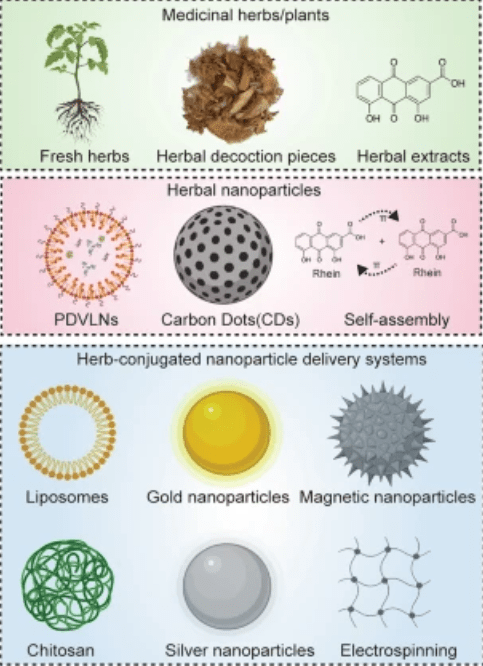
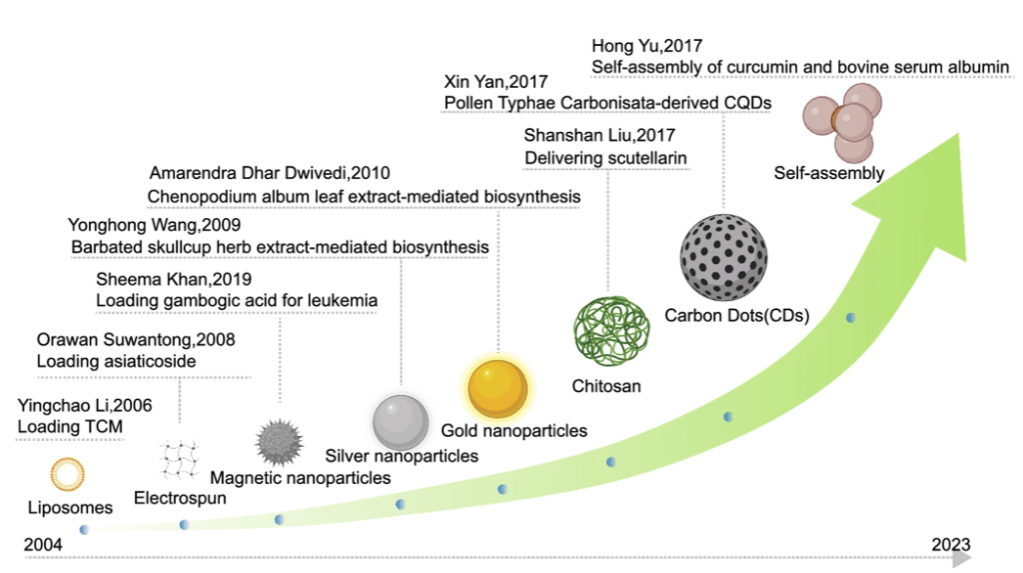
The study categorized innovative systems into four core areas: plant-derived vesicle-like nanoparticles (PDVLNs), carbon dots (CDs), self-assembled nanoparticles, and nanoparticle delivery platforms. PDVLNs, which are nanoscale particles naturally secreted by plants, have shown promise in regulating inflammation, improving metabolism, and targeting disease. CDs are nanosized carbon particles with optical and biological properties derived from carbonized traditional herbs like safflower and peach kernel. Self-assembly involves herbal compounds spontaneously forming nanoparticles via noncovalent interactions, offering precision in drug design. Delivery systems using liposomes, chitosan, gold/silver, and magnetic nanoparticles optimize bioavailability and targeting, marking a turning point in herbal pharmacology.
Focus on Bioactive Herbal Compounds
Curcumin, berberine, quercetin, celastrol, and triptolide were identified as the top herbal compounds incorporated into nanoparticle formulations. Curcumin nanoparticles enhance solubility and efficacy in wound healing, inflammation, and cancer treatment. Berberine, an antimicrobial alkaloid, has been explored through self-assembly and encapsulation methods for ulcerative colitis and bacterial infections. Quercetin-based nanoparticles improve insulin secretion and exhibit neuroprotective properties. Celastrol and triptolide, potent but toxic compounds, are made safer and more effective through ROS-responsive, liposome-based, or exosome delivery systems. These case studies underscore how nanotechnology can transform the clinical utility of historically potent yet problematic herbal agents.
Clinical Translation and Challenges
Despite the promising results in preclinical research, clinical application of herbal nanoparticles remains limited. Key barriers include scalability of nanoparticle synthesis, toxicity concerns of carrier materials (like gold or silver), and biological variability between animal models and humans. Moreover, there is a lack of standardized protocols and regulatory frameworks for herbal nanomedicines. However, recent advances in safer carriers like chitosan, plant-derived vesicles, and carbon dots are encouraging. Topical applications, such as nanoparticle-infused wound dressings and psoriasis treatments, are showing translational potential due to their low systemic absorption and favorable safety profiles.
Global Collaboration and Research Gaps
While China and India dominate the publication landscape, the study reveals that meaningful global collaboration is still in its early stages. Expanding international partnerships could help address existing gaps in clinical validation, safety assessment, and large-scale production. Countries with traditional herbal medicine systems—such as South Korea, Japan, and Arab nations—are underrepresented and could contribute more significantly through collaborative frameworks. The U.S., with its advanced infrastructure, can serve as a bridge for clinical trials and translational research. There is also a growing need to integrate nanotechnology researchers with pharmacologists and clinicians for true interdisciplinary progress.
Conclusion and Future Directions
This comprehensive bibliometric analysis confirms that the field of herbal nanoparticles is expanding rapidly, driven by the intersection of ancient botanical knowledge and modern nanotechnology. China leads the way, followed by India and Iran, while journals like International Journal of Nanomedicine are shaping the academic dialogue. Emerging trends point to innovations in green synthesis, curcumin-based formulations, and bioinspired drug delivery systems. Despite clinical challenges, the field holds strong potential for addressing complex health problems. The study not only charts historical growth but also highlights future opportunities for research, collaboration, and clinical translation in the realm of herbal nanomedicine.


You must be logged in to post a comment.