By Iqra Sharjeel
Abstract
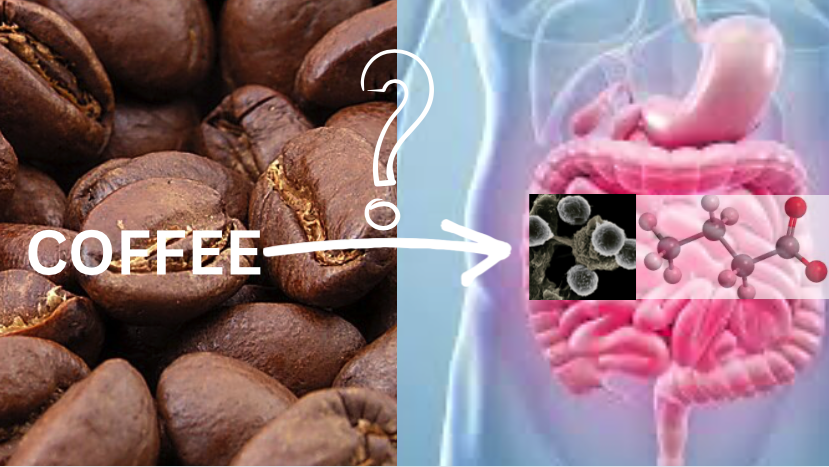
Recent research has identified a novel link between coffee consumption and the composition of the human gut microbiome. A large-scale 2024 study published in Nature Microbiology revealed that both regular and decaffeinated coffee intake is associated with significantly increased abundance of Lawsonibacter asaccharolyticus, a gut bacterium known for producing butyrate, a short-chain fatty acid essential for colon health and anti-inflammatory processes. This review synthesizes current findings on the relationship between coffee metabolites and microbial modulation, highlights mechanistic insights from in vitro experiments, and discusses potential implications for human health and disease prevention.
Introduction
Coffee is a globally consumed beverage with well-documented effects on various aspects of human health, including metabolic, cardiovascular, and neurological outcomes. Traditionally, these benefits were attributed primarily to caffeine and antioxidant compounds such as chlorogenic acids. However, emerging evidence suggests coffee exerts significant influence on the gut microbiome—a complex community of microorganisms integral to host health. The gut microbiome modulates digestion, immune function, and systemic inflammation, with dysbiosis implicated in numerous chronic diseases.
A pivotal advancement in this area is the association between coffee consumption and the increased abundance of Lawsonibacter asaccharolyticus, a relatively understudied anaerobic bacterium involved in butyrate production. Butyrate, a short-chain fatty acid, is vital for maintaining the integrity of the gut epithelium and exerts anti-inflammatory effects that may protect against colorectal cancer, inflammatory bowel disease, and metabolic syndrome.
Methods Summary of the Key Study
The 2024 Nature Microbiology study analyzed over 54,000 human stool samples collected from diverse cohorts across multiple countries. Dietary intake was assessed via detailed food frequency questionnaires, enabling stratification of participants into coffee consumers (regular and decaf) and non-consumers. Using high-throughput 16S rRNA sequencing and metagenomic analysis, researchers profiled gut microbial communities and correlated relative abundances of microbial taxa with coffee intake.
To establish causality and mechanistic understanding, in vitro cultivation experiments exposed L. asaccharolyticuscultures to coffee extracts and individual coffee-derived metabolites such as quinic acid, trigonelline, and hippurate.
Results
Microbial Enrichment
- Coffee drinkers exhibited 4.5 to 8-fold higher abundance of L. asaccharolyticus compared to non-drinkers.
- The association was consistent for both caffeinated and decaffeinated coffee, indicating that caffeine is not the primary driver.
Metabolic Mechanisms
- Coffee contains several bioactive compounds—most notably quinic acid, trigonelline, and hippurate—that were found in higher concentrations in the stool and plasma of coffee consumers.
- In vitro studies demonstrated that coffee extracts and these metabolites selectively stimulate L. asaccharolyticusgrowth, suggesting a direct prebiotic-like effect.
Butyrate Production
- L. asaccharolyticus is a potent producer of butyrate, which serves as the main energy source for colonocytes, promotes mucosal barrier integrity, and exerts systemic anti-inflammatory effects.
- Increased butyrate levels were inferred from metabolomic profiles of coffee consumers, correlating with microbiome changes.
Discussion
Implications for Gut and Systemic Health
The enrichment of L. asaccharolyticus by coffee introduces a novel microbial pathway through which coffee may exert beneficial health effects. Butyrate’s role in maintaining colon health is well-established, and its anti-inflammatory properties may mediate reduced risks of colorectal cancer, inflammatory bowel diseases, and metabolic disorders observed in epidemiological studies of coffee consumption.
Furthermore, the fact that decaffeinated coffee induces similar microbial effects suggests that coffee’s polyphenols and other non-caffeine compounds play a crucial role in microbiome modulation.
Broader Nutritional and Clinical Perspectives
- These findings position coffee as a functional dietary component capable of shaping the gut microbiota beneficially.
- They open avenues for using coffee or its key metabolites as prebiotic agents to target gut dysbiosis.
- Clinical trials are warranted to investigate the impact of coffee-induced microbiome changes on specific health outcomes such as inflammation, insulin resistance, and colon cancer risk.
Conclusion
This emerging body of research underscores the complex interplay between diet, gut microbiota, and health. Coffee consumption modulates the gut microbiome by enriching Lawsonibacter asaccharolyticus, a butyrate-producing bacterium, through its bioactive metabolites. These microbial changes provide a plausible mechanistic basis for some of the well-documented health benefits of coffee and highlight a promising target for future nutritional and therapeutic interventions.
References
- Nature Microbiology Study, 2024, PMC11602726
- Nutrigenomics Institute. Coffee Consumption and Lawsonibacter asaccharolyticus Abundance. nutrigenomicsinstitute.com
- Tokyo Microbiota-ISM. Coffee and Gut Microbiome Interaction. tokyo.microbiota-ism.com
- NutraIngredients-USA. New Insights into Coffee and Gut Health. nutraingredients-usa.com
- Food & Wine. Scientists Just Discovered a Huge Health Benefit of Coffee. foodandwine.com


You must be logged in to post a comment.